

There are eight tribes in what we call the North Sound region. Most, but not all have tribal health centers. And most, but not all are currently exercising tribal sovereignty through the Indian Health Care Service (IHS) Tribal Self-Governance Program. There is a long history between the Native people and the United States Federal Government. In 1824 the U.S. established the Office of Indian Affairs in the U.S. War Department.
“The Office of Indian Affairs was given statutory authority in 1832 (4 Stat. 564) and remained within the War Department until its transfer to the Department of the Interior in 1849 (9 Stat. 395). Even after 1849, however, the War Department—and by extension, the Secretary of War—was heavily involved in federal Indian affairs, coordinating military campaigns against American Indian tribes and expeditions to Alaska throughout the mid- to late 19th century.” (National Archives, Native American Heritage) Today, IHS is within the U.S. Department of Health and Human Services, and Indian health functions by coordinating “the Congressional appropriations for health care to be provided to American Indians/Alaska Natives (AI/AN) through three broad types of programs, with facilities located on or near Indian reservations or in certain urban areas.” (AIHC, Indian Health Care In Washington State, 2017)
According to IHS’s website, “Tribal governments continue to develop innovative solutions to the health care delivery challenges of their communities. Tribes consider the needs and circumstances of their members when selecting from available health care options. Tribes may choose one or a combination of the following options:
- Continue to receive direct health care services offered by the IHS to American Indians and Alaska Natives.
- Use the authority of the Indian Self-Determination and Education Assistance Act (ISDEAA), Titles I and V, to assume responsibility for health care formerly offered by the federal government. Tribes may contract with the IHS through self-determination contracts and annual funding agreements under Title I or self-governance compacts and funding agreements under Title V.
- Fund the establishment of their own programs or supplementation of ISDEAA programs.”
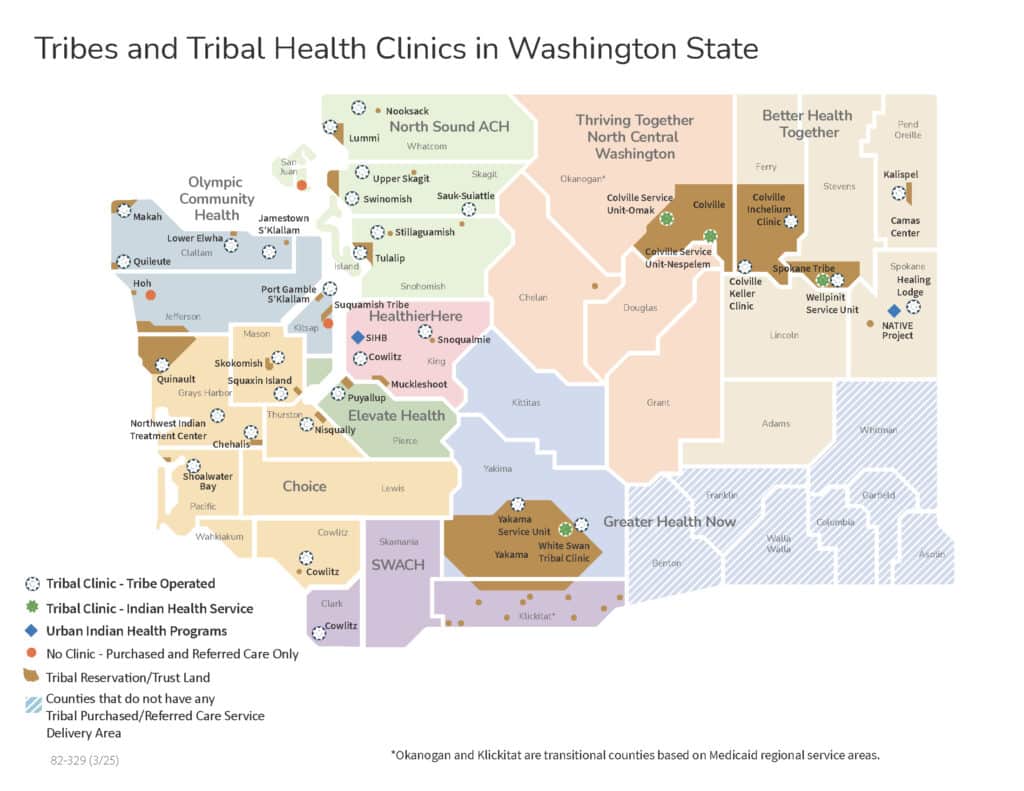
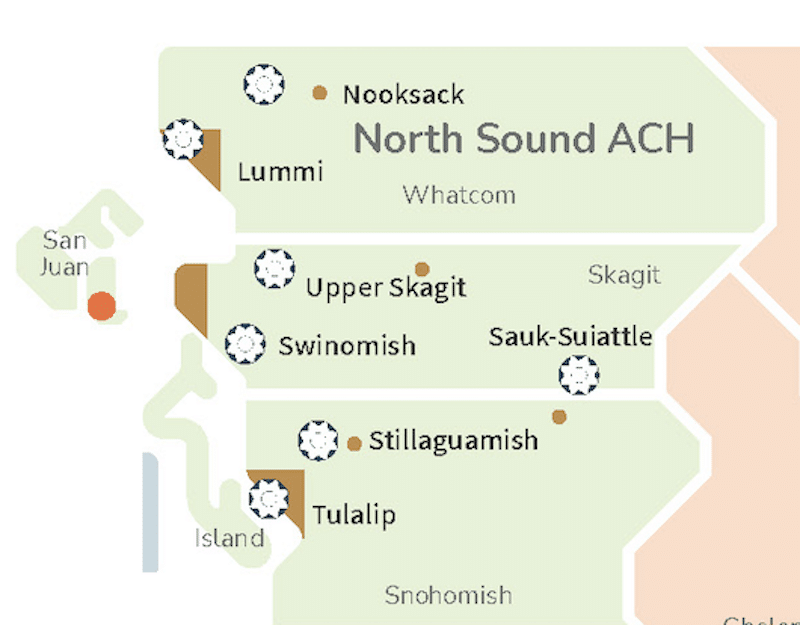
Of the eight tribes in the North Sound region, seven have a tribal clinic that is tribally operated, and one does not have a clinic and only provides Contract Health Services.
Tribal Health Centers (operating through self-governance compact):
- Nooksack Indian Tribe – Nooksack Health Department’s Medical Clinic
- Lummi Nation – Lummi Nation Health Center
- Upper Skagit Indian Tribe – Upper Skagit Tribal Health Clinic
- Swinomish Indian Tribal Community – Swinomish Medical Clinic
- Sauk-Suiattle Indian Tribe – Sauk-Suiattle Indian Tribe Medical & Behavioral Health Clinic
- Stillaguamish Tribe of Indians – Stillaguamish Tribe Wellness Clinic
- Tulalip Tribes – Tulalip Health Systems
Contact Health Services (no clinic site):
- Samish Indian Nation – Samish Indian Nation Health Services
- Website
- Read this informational written by the Northwest Portland Area Indian Health Board to learn more about the Samish Indian Nation Health Services.
See these resources for related learning:
- In this toolkit, the section: Example of Self-Governance: Swinomish Indian Tribal Community Dental Clinic details how self-governance is upholding tribal sovereignty and a benefit to the health of AI/AN people in the North Sound region.
- In this example, they highlight Swinomish Indian Tribal Community and the Dental Health Aid Therapists program.
- This *NEW* resource from the HCA details the Washington State Tribal Prevention System and One way Tribes are combating the opioid crisis.
- SAMHSA Native Connections – Culture Is Prevention. Administration for Native Americans – Administration for Children and Families – CULTURE IS PREVENTION: A Strength Based, Culturally Grounded Journey Toward Prevention, Intervention, and Healing – ACF’s Action Plan for Missing and Murdered Indigenous People, October 2023