
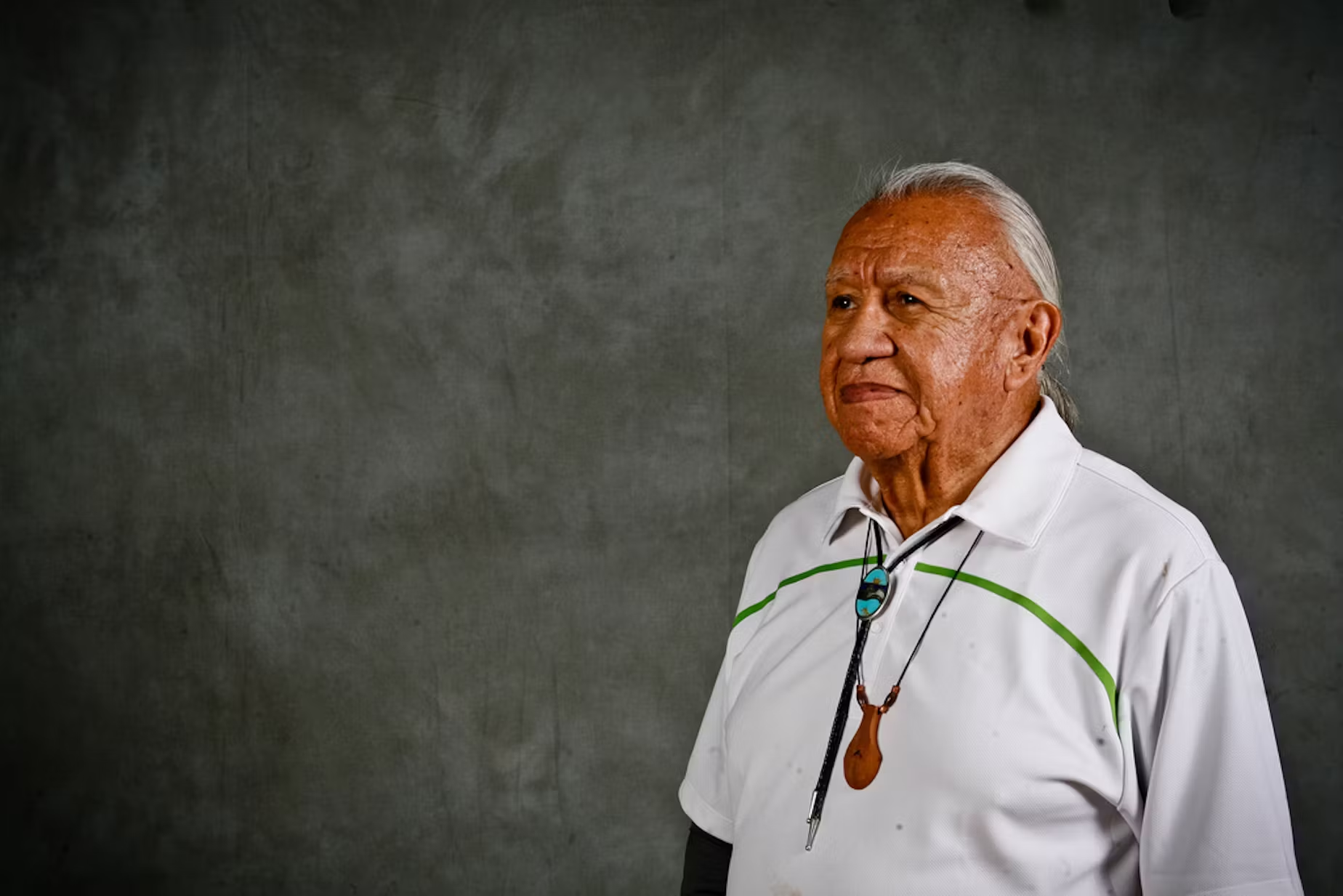
The late Billy Frank Jr. was a Nisqually tribal member and is most commonly known as one of the major Native leaders during the ‘Fish Wars’ of the 1960s – 1970s that occurred in Washington State. Billy Frank Jr. was first arrested at age 14 for fishing in his usual and accustomed fishing grounds, a treaty right that is outlined in the Treaty of Medicine Creek as an inherent right of the Nisqually people. Throughout his life he would be arrested over 50 times for continuing to exercise his treaty right to fish. Frank is also commonly known for his various leadership roles for Nisqually Tribal and in his time served as Chairman of theNorthwest Indian Fisheries Commission for over 30 years.
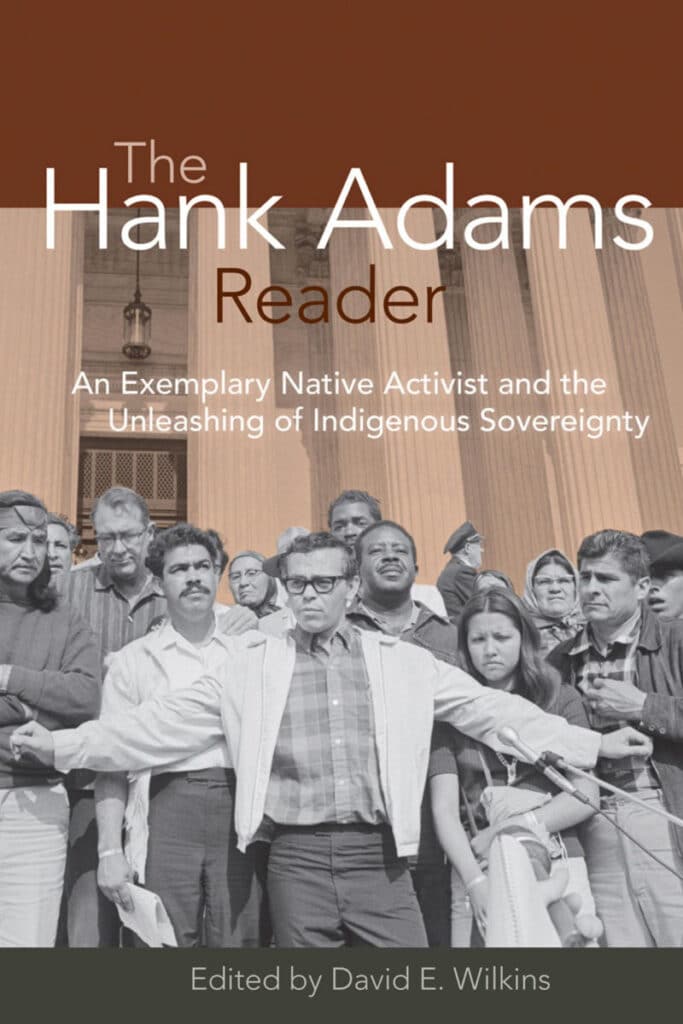
In the book, The Hank Adams Reader: An Exemplary Native Activist and the Unleashing of Indigenous Sovereignty, Professor David E. Wilkenson writes, “Frank is a dedicated warrior who battled local, state, and federal officials for years in a relentless effort to secure and exercise his and his nation’s treaty-reserved rights to fish.” Wilkenson goes on to include the words of Jerry Adams that describe the friendship and comradery between three significant Native leaders of the time, Vine Deloria Jr. (Standing Rock Sioux), Hank Adams (Quinault), and Billy Frank Jr. (Nisqually). Adams writes, “This dynamic trio of men would be triumvirate of titans, giants who walked the earth to set people an example for centuries to come. In the contemporary West, one could imagine a telling focused on organizational effectiveness and the skill sets, neatly divided into practical activists (that would be Frank), intellectual strategist (Deloria), and far-sighted visionary (enter Hank Adams), that are required to accomplish the most complex and difficult tasks.”
Billy Frank Jr. was leading fish-ins and organizing communication about issues and unjust treatment that Native fishermen faced during the 1960s. In response to Indian fishing activities, places like Frank’s Landing (Nisqually Tribal lands), were in constant surveillance and maintenance by the U.S. Army so information could be shared to its Counterintelligence Analysis Detachment (C.I.A.D.). During this time Wilkenson writes that, “… reports stated that Army units at Fort Lewis were on standby alert status for the State-Tacoma raid on the Puyallup Indian encampment on Puyallup tribal trust lands on September 9, 1970.” During this time there was back and forth between the Federal, State, and local officials about lawfulness of jurisdictional enforcement on tribal lands. Today we are more familiar and informed on tribal jurisdiction and the importance of understanding government-to-government relationships paired with treaty rights. Our informedness of today can be attributed to the work and activism done by Native leaders like Billy Frank Jr., Hank Adams, and Vine Deloria Jr.
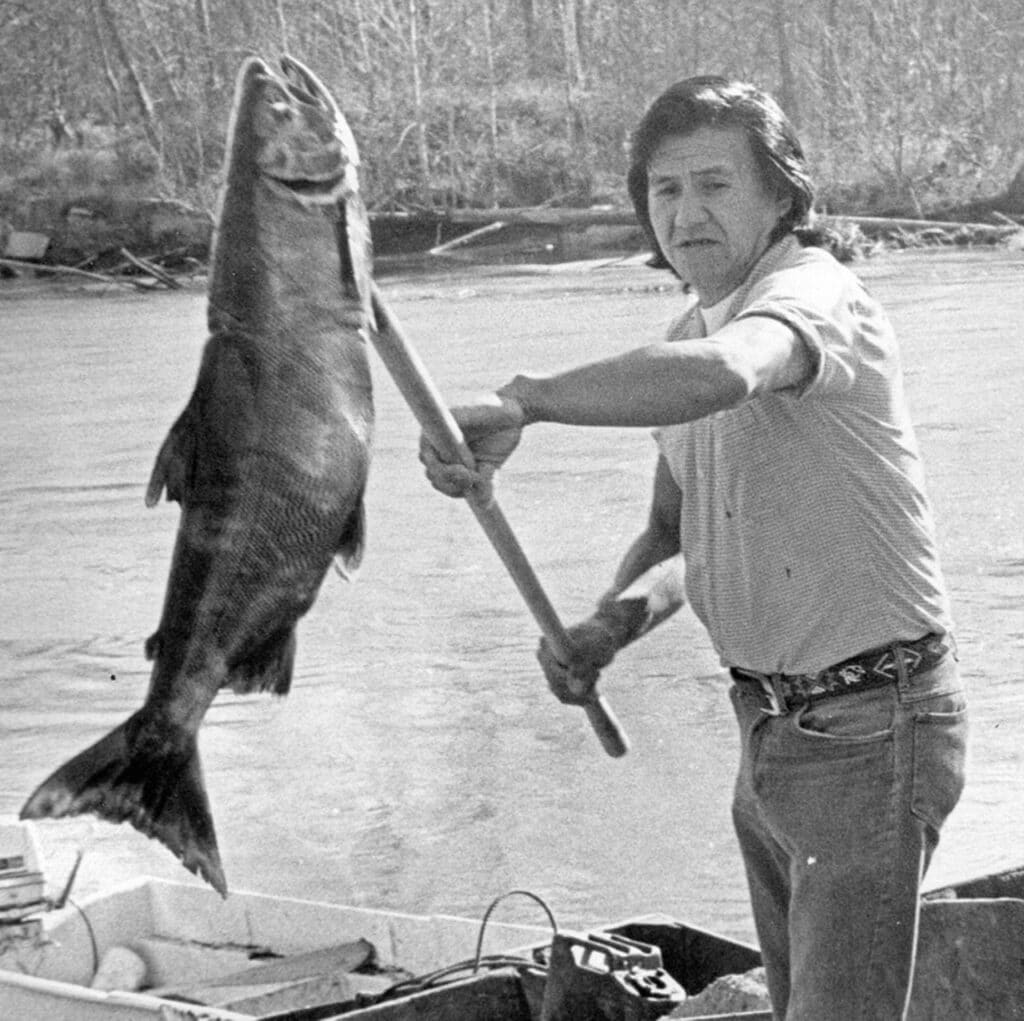
To many, Frank was known as a fisherman, activist, leader, father, and a veteran; a warrior for Indian people. His activism work significantly led the way to the 1974 Boldt Decision in United States v. Washington. The Boldt Decision affirmed the rights of Washington treaty tribes to half of the salmon in western Washington, reaffirmed treaty rights of tribal nations, and established tribal nations as comangers of salmon protection efforts. Billy Frank Jr. dedicated his life to advocating for treaty rights, just treatment and civil rights of Native people, and salmon restoration and protection. By the time of his passing on May 5, 2014, Frank had been awarded:
- The Albert Schweitzer Prize for Humanitarianism
- The Common Cause Award for Human Rights Efforts
- The American Indian Distinguished Service Award
- The Washington State Environmental Excellence Award
- And the Wallace Stegner Award
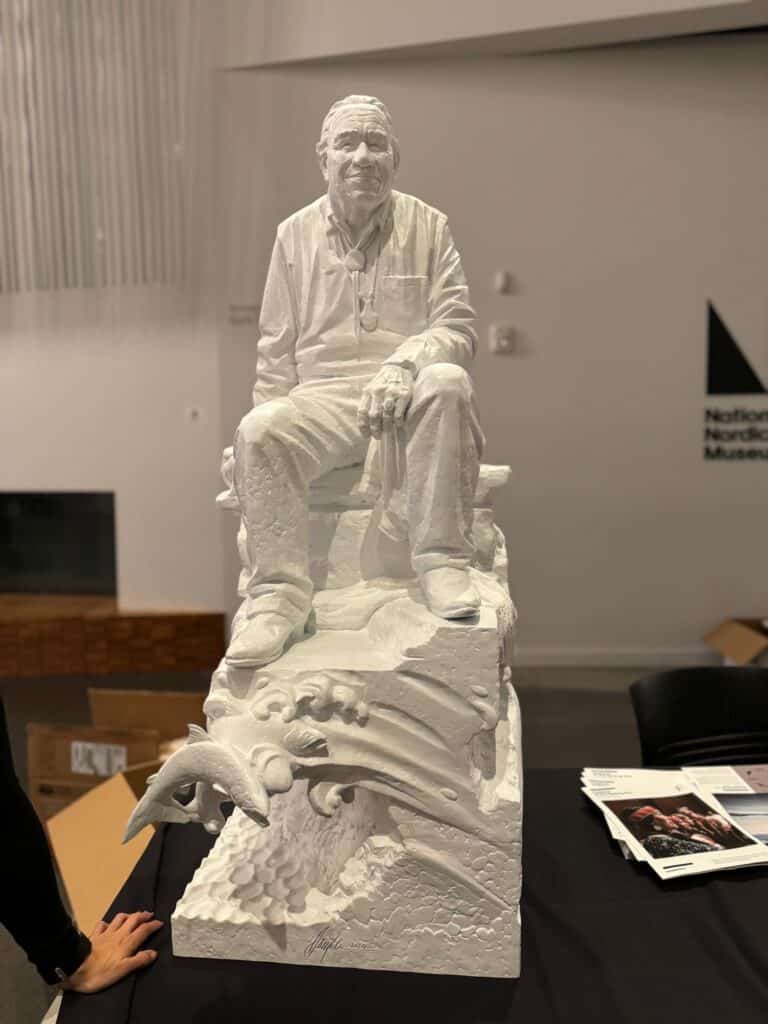
After his passing, Billy Frank Jr. was also awarded the Presidential Medal of Freedom by President Barack Obama. Today, his legacy continues to be an inspiration to many across Indian Country and the global community. His relentless efforts to uphold treaty rights and tribal sovereignty remains a beacon and guiding light for Native people and all people across Indian Country. In honor of his legacy, a statue of Billy Frank Jr. will be added to the National Statuary Hall Collection in Washington, D.C., in 2025. Housed in the United States Capitol building, this collection features two sculptures of notable Americans from every state. A maquette of the statue has been traveling around Washington State and to various Tribal Nations.
Books & articles about Billy Frank Jr.
- UW Press – Where the Salmon Run The Life and Legacy of Billy Frank Jr.– August 2013
- Northwest Treaty Tribes – Tell the Truth: The Collected Columns of Billy Frank Jr. – November 2015
- UW Press – Messages from Frank’s Landing A Story of Salmon, Treaties, and the Indian Way – January 2006
- KUOW – It’s a good day to celebrate Billy Frank Jr. – March 9, 2023
- KUOW – Billy Frank Jr.: Tribes Must Try To Bring The Salmon Back – April 10, 2014
- Port of Olympia – Celebrating Billy Frank Jr. Day – 2024
- ArtsWA – Meet Billy Frank Jr.
- ArtsWA – Billy Frank Jr. Statue Project (see this link for more information about the statue of activist and humanitarian Billy Frank Jr. set to be added to the National Statuary Hall in Washington, D.C.)
- Northwest Treaty Tribes – Three books you should read about the legacy of Billy Frank Jr. – March 2016
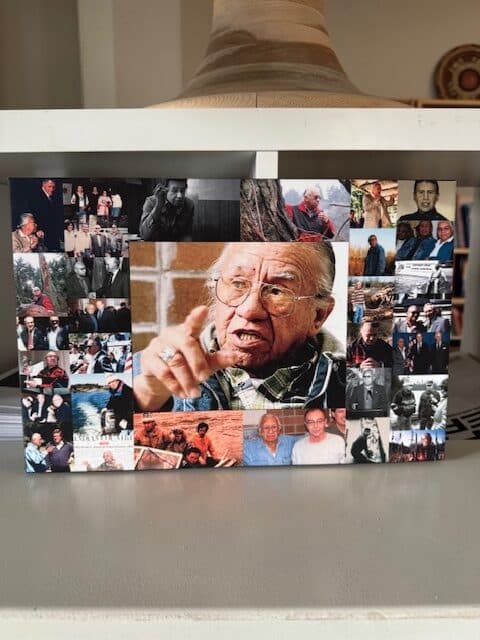
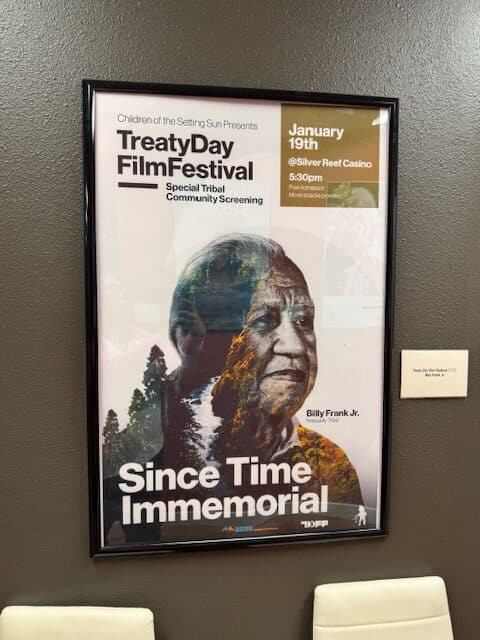
Quotes by Billy Frank Jr.
- “I don’t believe in magic. I believe in the sun and the stars, the water, the tides, the floods, the owls, the hawks flying, the river running, the wind talking. They’re measurements. They tell us how healthy things are. How healthy we are. Because we and they are the same. That’s what I believe in. Those who learn to listen to the world that sustains them can hear the message brought forth by the salmon.” – Billy Frank Jr.
- “You do what you can in your lifetime. Then that’ll go on to another lifetime. Then another lifetime. Then another.” -Billy Frank Jr., Messages from Frank’s Landing
- “We have to work with each other. Our earth is crying. And it’s crying for help. In the everyday movement of our country, you can make a difference.” -Billy Frank Jr.
- “Every time we carry an eagle feather, that’s sovereignty. Every time we pick berries, that’s sovereignty. Every time we dig roots, that’s sovereignty.” -Billy Frank Jr.
- “I hope I can live to be 120 because it’s going to take that long to turn this ship around…You got to be very patient at what we are doing. I talked to the President, the Department of Interior, Secretaries of Commerce, the Governor, and a lot of these people are talking the happy talk, ‘Oh we love salmon, we love Puget Sound, we love to go fishing, all the business community loves salmon’ but then no one does anything about it. No one is in charge. So that’s why we are here…If the United States Government doesn’t take back their authority, we are gone. There will be no fish. But this is our country. All of us. So how are we going to make it happen? That change. You have to make it happen. We have to make it happen. We all have to keep the pressure on the United States Government to make that change. We haven’t seen a change yet, but…we are going to see a change. So here we are. You guys are so important to everything we do. I just want to thank you.” -Billy Frank Jr.
Billy Frank Jr. Street – Bellingham, WA
The previously known “Indian Street” in Bellingham, WA was renamed to “Billy Frank Jr. Street” on November 24, 2015, the same day Frank posthumously received the Presidential Medal of Freedom from the White House. The road leads directly to Western Washington University and is an opportunity to teach about who Billy Frank Jr. was and the legacy he leaves for all of us.
- Northwest Treaty Tribes – First Billy Frank Jr. Street Sign Installed in Bellingham – November 2015
- WWU Window – An old street with a new story The Bellingham City Council renames Indian Street in honor of treaty rights activist – November 2015
Discussion questions:
- Who are some of your cultural heroes?
- Let’s reflect on ‘fish-ins’ as a way of asserting treaty rights and civil rights of Native people in Washington State. Let’s reflect on other instances of civil disobedience throughout history and how such action has led to betterment and change for the people. Can you name similar or different instances of change making that was also happening during the Fish Wars era of the 1960s and 1970s across the country?