


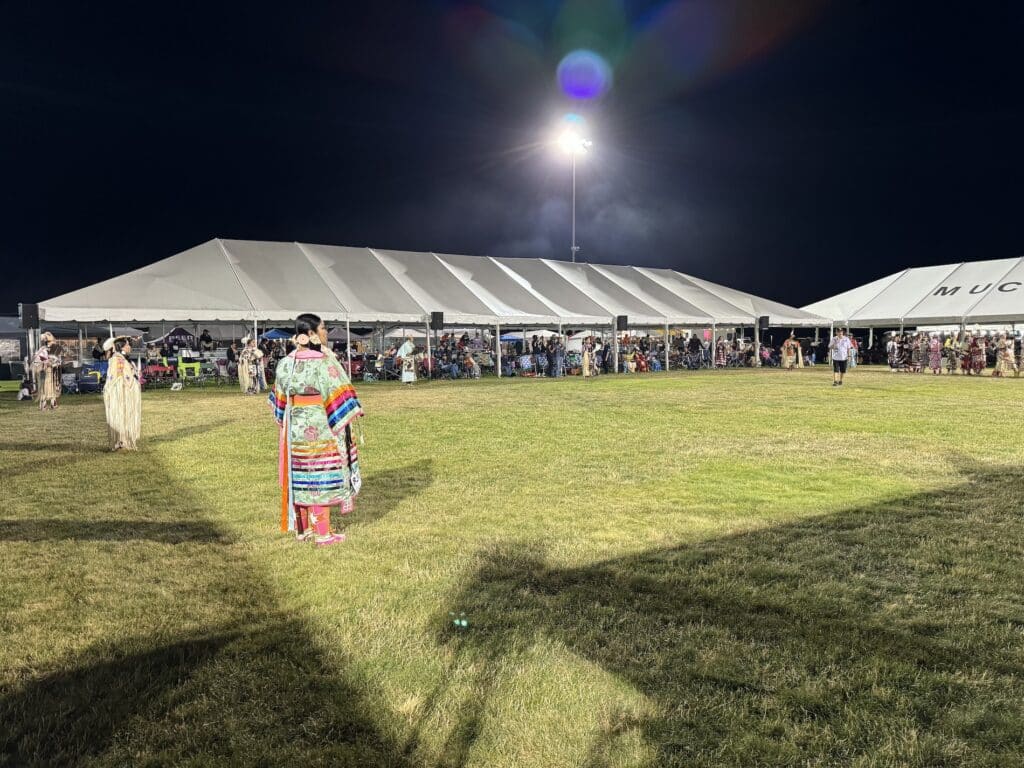
The pow wow season has begun in Coast Salish territory (spring and summer) and it is an exciting time to get to see Native culture in action. Whether it is a one-day pow wow or a three-day long pow wow, all are fun, vibrant, and a time of celebration with unique songs and dancing. Pow wows are highly organized and are on a set schedule that is planned out and delivered by the pow wow committee and the head staff. Pow wows are often annual events and once the pow wow is over, the committee usually begins planning, organizing, and fundraising for the next year’s pow wow.
Origins
One piece of history that people should know about pow wows in Coast Salish territory is that pow wows do not traditionally come from Coast Salish territory. Pow wows come out of the Plains and Great Basin areas of Turtle Island. Pow wows have found a place here through Natives that moved from the Plains and Great Basin areas to the Pacific Northwest. Due to the Indian Relocation Act active from 1952 to 1972, intended to push Natives off of the reservations across the Plains and Great Basin states, many Natives moved to urban cities like Seattle, San Francisco, Denver, Chicago, Minneapolis, and Portland. Although this policy was intended to be a harmful assimilation tactic, Native people brought with them the teachings and ways of life that have been embedded in their DNA for generations. Pow wows are an example of how Native people continue to come together to practice culture despite enduring hardship and struggle. Additionally, in Washington State, pow wows do traditionally come from the eastside of the mountains; tribes in Washington that are on the east side of the Cascades are not Coast Salish tribes. This is another important distinction between the Natives living in Washington State.
Intergenerational, Family Gatherings, and Travel
At pow wows you will see all ages dancing, ranging from the tiny tots to the golden age categories. Sometimes there are dance specials where moms can dance with their babies in cradleboards. Parents will bring their toddlers with them during grand entry and intertribals, and families go with their young ones during tiny tots. It is very common for families to travel for hours to attend pow wows on the weekends. Dancers and drummers often come from the east side of Washington, Idaho, and Oregon to attend the bigger pow wows in Washington, and vice versa. Being a dancer and/or drummer is a serious time commitment and a special commitment to the traditional teachings that come with being a dancer and/or singer. Many Native people refer to this commitment as “being on the pow wow trail.”
Traditional and Competition
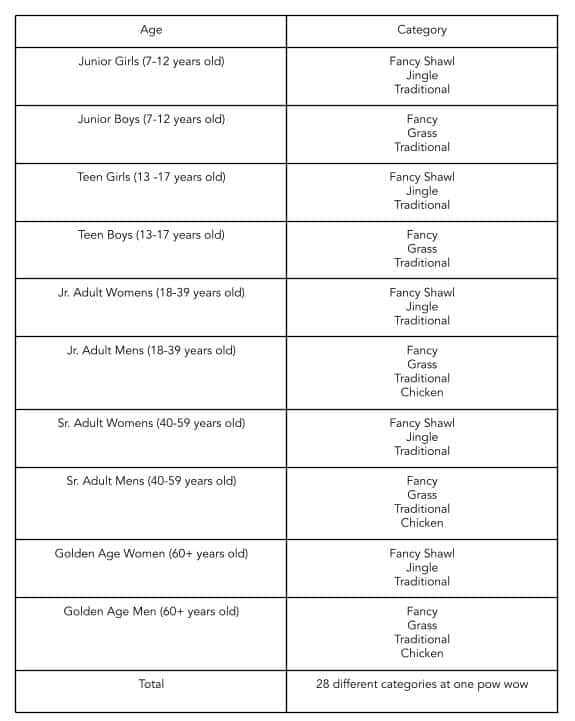
There are two types of pow wows; traditional and competition. Usually traditional pow wows are one day events and do not have category winners, but will instead feed the drummers, dancers, and attendees. Sometimes traditional pow wows will have a small gift or payment for all of the dancers. Competition pow wows are usually two days (Saturday and Sunday) or three days (Friday evening, Saturday all day, and Sunday all day). Competition pow wows have set competitions for each category and age range, with 1st, 2nd, 3rd, and sometimes 4th place winners. The table below outlines the different dance categories and age ranges that are often included at a competition pow wow and are consistent across the United States and Canada.
At the last pow wow I attended (Nisqually Wellbriety Pow Wow 2025), there were around 200 different songs that were sung and danced to in one weekend. Usually there are about 10 drum groups at each large/competition pow wow, so in this case, each drum group can end up being responsible for singing up to 20 different songs, depending on how many specials there are or additional protocol that needs to take place throughout the weekend. That said, the host drum is responsible for more songs than the rest of the drum groups at the request of families holding specials and/or the pow wow committee needs during the pow wow.
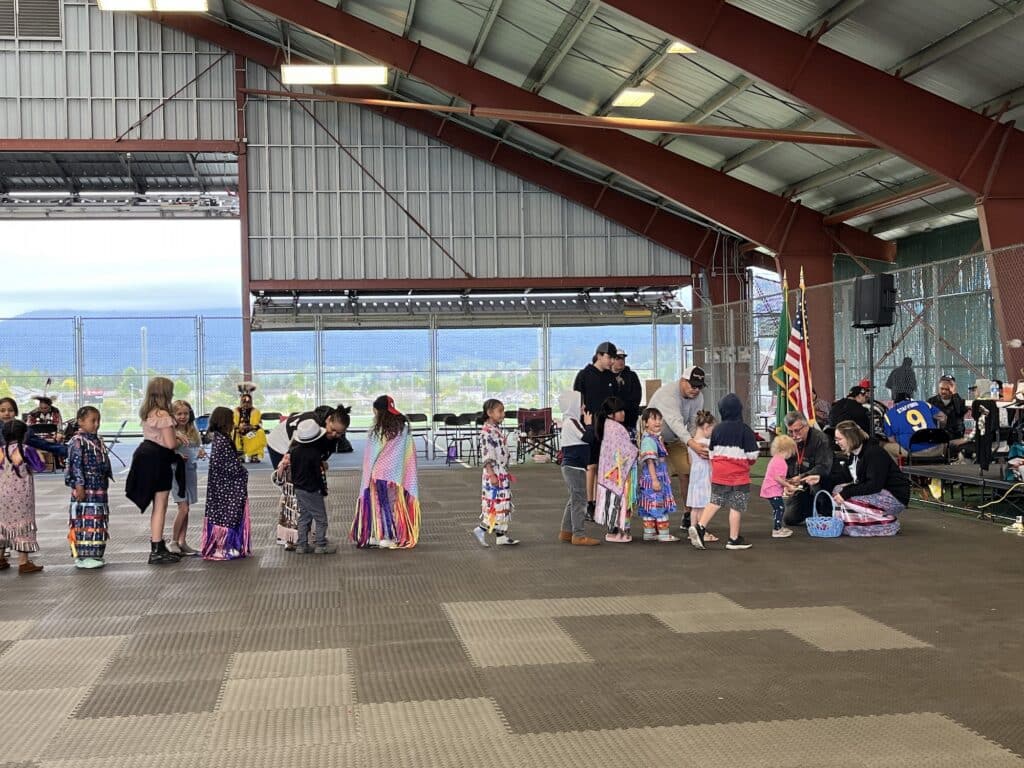
Tiny tots are an important part of the pow wows as well. They are not a judged category during competition pow wow but they have their own special time and songs throughout the weekend. Tiny tots are babies, toddlers, and children under the age of 7. Tiny tots can be in regalia or not be wearing regalia when they participate. The intention is to get all the young ones into the arena so that the rest of the pow wow goers can cheer for them and support them so they feel good about themselves and their dancing during pow wows. The tiny tots also get to line up after their song(s) and get a gift from the committee. Back in my tiny tot days we used to get $1, but with inflation and the cost of candy and toys going up, these days they will get $2 – $5 and maybe even a little gift bag.
One important question you might be asking yourself is about two-spirit, non-binary, and trans dancers. Dancers are allowed to dance or compete in any regalia and style that they choose as long as it is in the right age range for them. There are also two-spirits head staff at some pow wows as well as two-spirit specials. The Bay Area American Indian Two Spirits gatherings were initiated in 1998-1999 in San Francisco, and now hosts the largest two-spirit pow wow in the nation. They organized the BAAITS First Annual Two-Spirit Pow Wow on February 11, 2012 and have organized one ever since. Learn more about the 2025 Two-Spirit Pow Wow from the Fort Mason Center for Arts & Culture website.
Themes
Pow wow themes range a variety of topics. Common themes are focused around topics like:
- Education
- Wellness
- Wellbriety
- Veterans
- Mother’s Day
- Youth
- Honoring Elders
- Memorials
- Thriving culture
- and more
What To Bring
When attending a pow wow, I suggest bringing camping chairs; especially if the pow wow is outside. There might be seats or bleachers depending on the location, but bring along chairs in your car in case there aren’t seats provided or the seats are all taken by the time you get there. If you see bleachers or chairs with a blanket covering that area, that means that the seats are reserved. Please do not sit or move the blankets if they are in place, it might be where a family of dancers are sitting. Also, bring a water bottle to stay hydrated! I also suggest bringing cash in case some vendors only take cash as payment options. Lastly, don’t forget to bring your friends and family!

Etiquette
The outfits that dancers wear are not ‘costumes,’ they are called ‘regalia.’ Do not call pow wow regalia a ‘costume.’ Natives are not playing a character when they dance. Natives are not pretending to be something else when they dance. Regalia is the proper term for what dancers are wearing at pow wows. This might seem like common sense, but don’t touch anyone’s regalia; this includes everything from their shawls, beadwork, feathers, accessories, etc. You can look while refraining yourself from reaching out and touching something that might be older than you, your parents, or your grandparents.
The topic of modesty comes up in relation to pow wows as well. There are teachings about not showing too much skin (regardless of gender) when at pow wows. You won’t need heels since there will be walking (and dancing) involved. Shorts and t-shirts are fine, especially on hot days; tank tops that aren’t spaghetti straps are also acceptable. Wear your favorite Native designers and Native made jewelry if you have some! If you want to take photos of an individual dancer in regalia, please ask that dancer before you do. Listen to the Master of Ceremonies, they will be announcing what is happening throughout the pow wow, they will also announce when absolutely no photos or videos are allowed during certain ceremonial parts of the pow wow. Be on time for grand entry so you can see all of the dancers dance in the flags and the protocol that goes along with grand entry. No drugs, alcohol, or firearms are allowed at any pow wow; it is explicitly written on most pow wow flyers. During intertribals, all people are welcome to dance in the arena, you do not have to be Native and you do not have to be in regalia; in fact the MC will encourage you to dance if you are new to pow wows or are spectating that day. Don’t forget to pay the vendors a visit. There are a lot of things you will see at pow wows that you most likely will not find in any other setting. There will be Native arts and crafts vendors as well as food vendors for your enjoyment and to support Native businesses!
Take Your Learning With You
Look up the pow wows in your area happening this spring and summer! You can search at colleges, on Tribes’ websites and social media pages, Native organizations, and more.
Discussion questions:
- If you have attended pow wows in the past, what stuck out to you?
- Do you have large cultural gatherings that you attend regularly during a certain season?
- Sometimes people express hesitancy about attending Native-led events, what questions are coming up for you after reading this blog post?
