

Between the 1880s and the 1920s, the goal of Indian education in the United States was to force assimilation onto American Indians by targeting American Indian/Alaska Native (AI/AN) children and families by removing children from their homes and forcing them to attend government-run Indian boarding schools. According to an essay written by Carolyn J. Marr titled Assimilation Through Education: Indian Boarding Schools in the Pacific Northwest:
“The Indian boarding school movement began in the post Civil War era when idealistic reformers turned their attention to the plight of Indian people. Whereas before many Americans regarded the native people with either fear or loathing, the reformers believed that with the proper education and treatment Indians could become just like other citizens. They convinced the leaders of Congress that education could change at least some of the Indian population into patriotic and productive members of society.
“One of the first efforts to accomplish this goal was the Carlisle Indian School in Pennsylvania, founded by Captain Richard Henry Pratt in 1879. Pratt was a leading proponent of the assimilation through education policy. Believing that Indian ways were inferior to those of whites, he subscribed to the principle, ‘kill the Indian and save the man.’ At Carlisle, young Indian boys and girls were subjected to a complete transformation. Photographs taken at the school illustrate how they looked ‘before’ and ‘after.’ The dramatic contrast between traditional clothing and hairstyles and Victorian styles of dress helped convince the public that through boarding school education Indians could become completely ‘civilized.’ Following the model of Carlisle, additional off reservation boarding schools were established in other parts of the country, including Forest Grove, Oregon (later known as Chemawa).” (Marr, American Indians of the Pacific Northwest Collection, University of Washington).
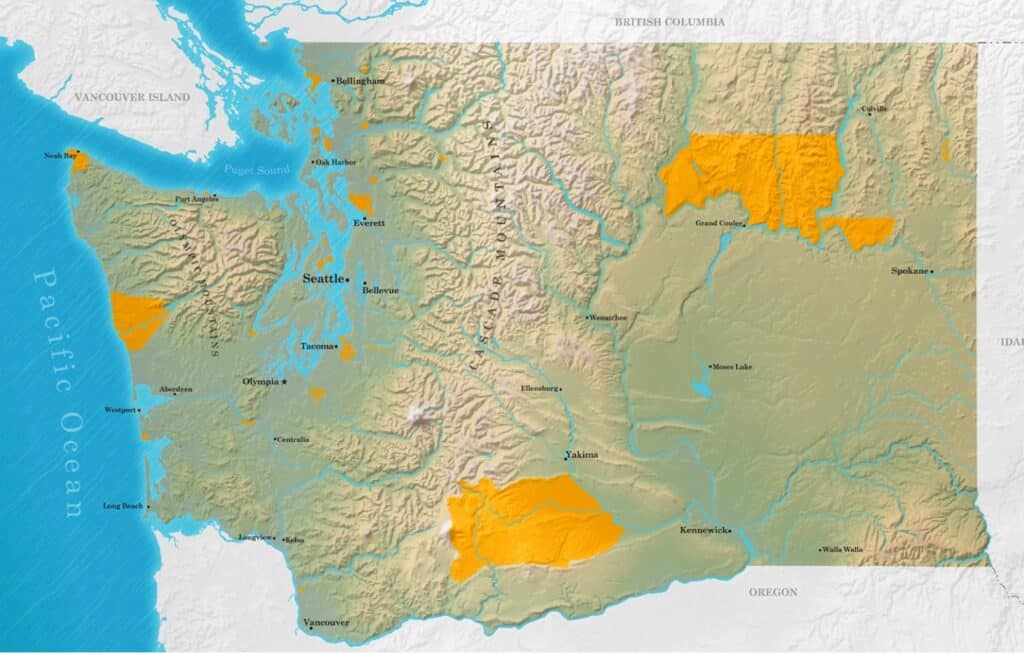
According to a report done by the U.S. Department of Interior, there were 15 boarding schools that were operating during the boarding school era in Washington State:
- Chehalis Boarding and Day School, Oakville
- Colville Mission School, Kettle Falls
- Cushman Indian School, Tacoma
- Fort Simcoe Indian Boarding School, White Swan
- Fort Spokane Boarding School, Davenport
- Neah Bay Boarding and Day School, Neah Bay
- Puyallup Indian School, Squaxin Island
- Quinaielt Boarding and Day School, Taholah
- S’Kokomish Boarding and Day School, Olympia
- St. George Indian Residential School, Federal Way
- St. Joseph’s Boarding School, Federal Way
- Paschal Sherman Indian School, Omak
- Tonasket Boarding School, Tonasket
- Tulalip Indian Industrial School, Tulalip Bay
- Tulalip Mission School, Priest’s Point
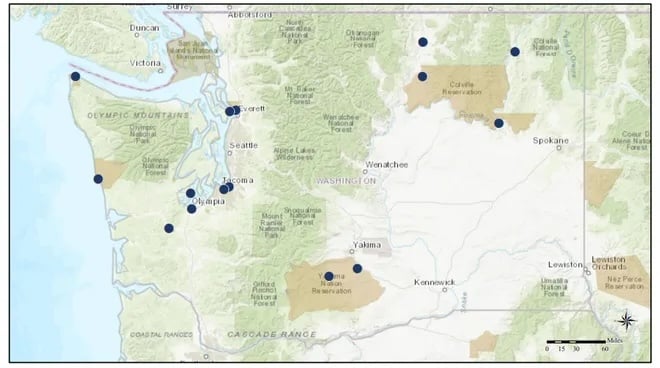
There are many families in Coast Salish territory that still remember their relative(s) attending some of the boarding schools listed above. Although these 15 Indian boarding schools operated in Washington State, there is a history of many American Indians attending a well known Indian boarding school called Chemawa Indian School in Oregon. Many Native children from Washington, Idaho, Oregon, Nevada, and California and from other places across Indian Country, went to Chemawa Indian School. According to Oregon Public Broadcasting, “In 1880, it became the country’s second school of its kind and remains the nation’s oldest such boarding school still in operation” (Horton, 2025). Chemawa opened second to the Carlisle Indian School and is the oldest Indian boarding school that is still in operation today. Chemawa Indian School is still under operation of the Bureau of Indian Education.
This is a section from a National Parks Service article that was written about the Fort Spokane Indian Boarding School:
“Founded originally as a military fort in 1880, Washington State’s Fort Spokane served to contain the Confederated Tribes of the Colville and the Spokane Tribe of Indians on their reservations and buffer them from emigrating white settlers. Converted into a boarding school from 1900-1907, it became a critical site for the separation of Indigenous children from their families, communities, and homelands. Of the 408 federal Indian boarding schools established in the United States between 1819-1969, Fort Spokane is the only former boarding school owned and managed by the National Park Service. The surviving buildings are preserved as part of Lake Roosevelt National Recreation Area.
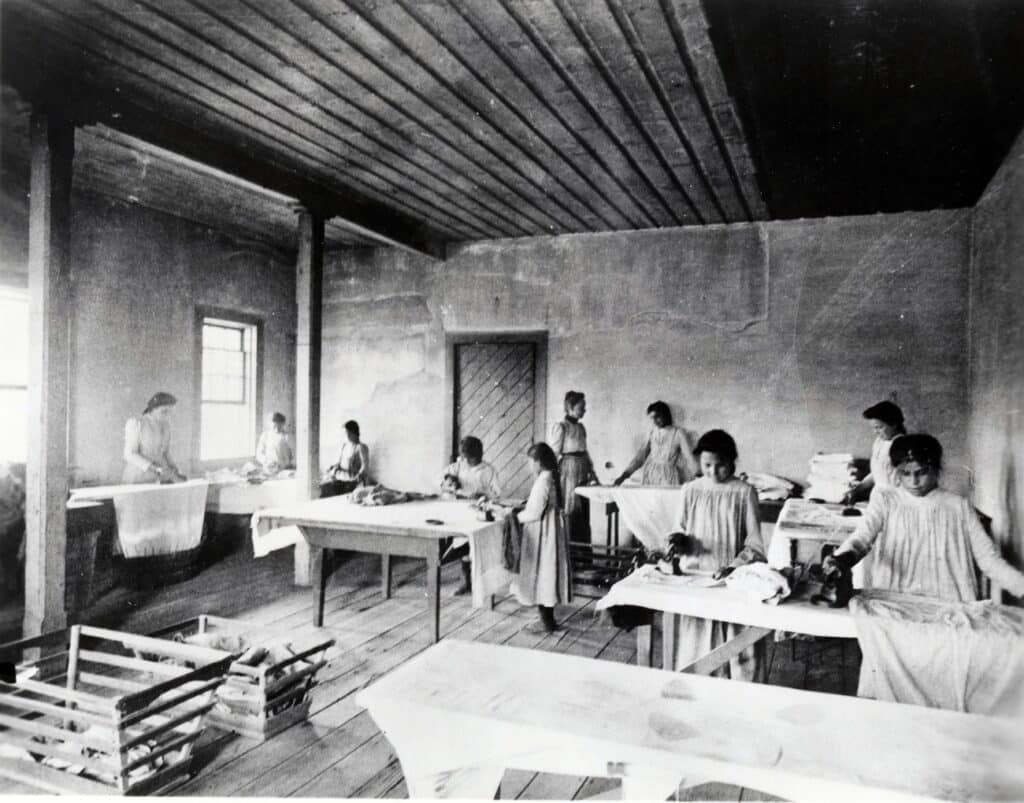
“Before boarding school attendance became mandatory, the children on the Colville and Spokane Reservations grew up surrounded by relatives. Home meant a complex network of family ties, responsibilities, and obligations that connected children to distant relatives, kin, and to the land itself. With the establishment of the boarding school at Fort Spokane, the Colville Indian Agency closed local reservation day schools and threatened to imprison parents if they did not send their children. For some families, this meant sending children as young as five years old as far as 60 miles away.
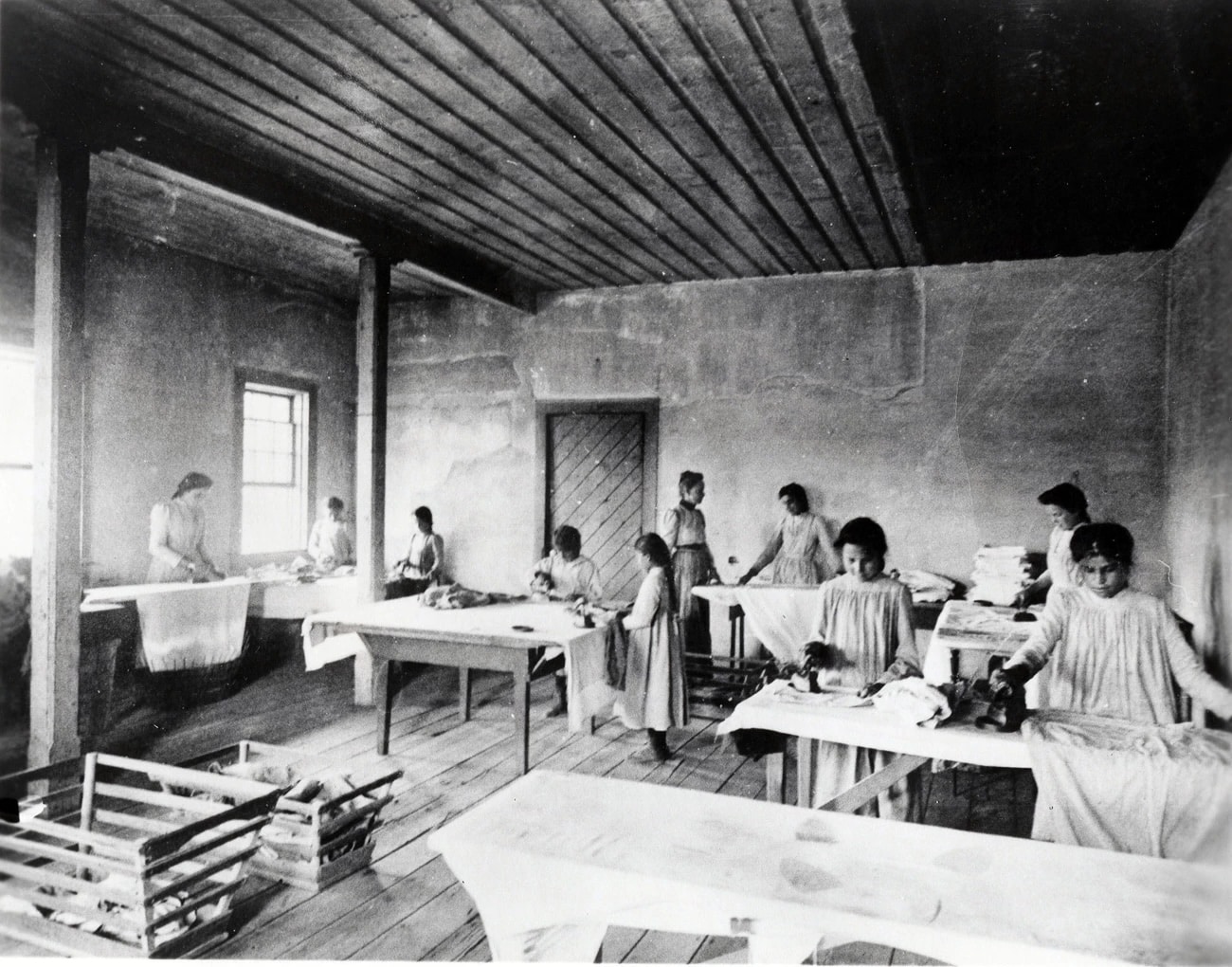
“At the boarding school, officials and reformers sought to Americanize their students by erasing the children’s Native identity, including severing their connection to their ancestral lands and replacing it with an entirely new way of life. The photo of girls working in the laundry room captures how the Fort Spokane Indian boarding school attempted to reshape Indigenous children through coerced assimilation and labor.” (Nicole Martin)
Orange Shirt Day – Annually on September 30
The origins of Orange Shirt Day are tied to the story of Phyllis Webstad. According to Phyllis’ biography on the Orange Shirt Society website, Phyllis is, “Northern Secwpemc (Shuswap) from the Stswecem’c Xgat’tem First Nation (Canoe Creek Indian Band). She comes from mixed Secwepemc and Irish/French heritage, was born in Dog Creek, and lives in Williams Lake, BC. Today, Phyllis is married, has one son, a stepson and five grandchildren. She is the Founder and Ambassador of the Orange Shirt Society, and tours the country telling her story and raising awareness about the impacts of the residential school system. She has now published two books, the “Orange Shirt Story” and “Phyllis’s Orange Shirt” for younger children.”
Phyllis’ story in her own words goes, “I went to the Mission for one school year in 1973/1974. I had just turned 6 years old. I lived with my grandmother on the Dog Creek reserve. We never had very much money, but somehow my granny managed to buy me a new outfit to go to the Mission school. I remember going to Robinson’s store and picking out a shiny orange shirt. It had string laced up in front, and was so bright and exciting – just like I felt to be going to school!
“When I got to the Mission, they stripped me, and took away my clothes, including the orange shirt! I never wore it again. I didn’t understand why they wouldn’t give it back to me, it was mine! The color orange has always reminded me of that and how my feelings didn’t matter, how no one cared and how I felt like I was worth nothing. All of us little children were crying and no one cared.” (Orange Shirt Society website).
Today, Orange Shirt Day is celebrated annually on September 30 across Canada and the United States. Orange Shirt Day is also referred to as the National Day of Truth and Reconciliation. Marysville School District and Edmonds School District have proclamations for honoring and recognizing Orange Shirt Day or the National Day of Truth and Reconciliation. Ferndale School District formally recognizes Orange Shirt Day as a school district.
- Marysville School District – Proclamation
- Edmonds School District – Proclamation
- Ferndale School District – Recognition
There are many individual classrooms and schools that are teaching about Orange Shirt Day in the North Sound region. There are also a few school districts that are being asked to formally recognize Orange Shirt Day through proclamations similar to Marysville and Edmonds School Districts.
Lastly, there is a new documentary out titled, Phyllis Webstad’s Orange Shirt Story that is available for purchase to hear the story of the woman who started Orange Shirt Day. For now, here is a short video titled, Phyllis Webstad – On Orange Shirt Day.
Additional Resources
- Legacy of Trauma: The Impact of American Indian Boarding Schools Across Generations (PBS, Dr. Denise K. Lajimodiere, October 2023)
- Assimilation Through Education: Indian Boarding Schools in the Pacific Northwest (University of Washington Libraries)
- List of Federal Indian Boarding Schools (FIBS) (Bureau of Indian Affairs, January 2024)
- Federal Indian Boarding School Initiative Investigative Report (Bureau of Indian Affairs, May 2022)
- Federal Indian Boarding School Initiative Investigative Report Vol. II (Bureau of Indian Affairs, July 2024)
- AG Ferguson creates Indian boarding schools Truth & Reconciliation Tribal Advisory Committee | Washington State (Office of the Attorney General, 2023)
- Chemawa Indian School opened 145 years ago in Forest Grove (Oregon Public Broadcasting, Kami Horton, February 2025)
- Government Boarding Schools Once Separated Native American Children From Families (History, Published: June 19, 2018. Last Updated: June 30, 2025)
- Fort Spokane Indian Boarding School (National Parks Service)
- Edmonds School District to recognize Sept. 30 as ‘Orange Shirt Day,’ honoring Indigenous residential school survivors (Edmonds News, August 28, 2025)