

Canoe Journey, also known as Tribal Canoe Journey, is an annual cultural celebration and traveling canoe revitalization effort that occurs in Coast Salish territory of Turtle Island (also known as the Pacific Northwest). This includes parts of Washington State, Oregon, British Columbia, and Alaska. Canoe Journey began with the Paddle to Seattle in 1989 thanks to the perseverance and leadership of Emmett Oliver of Quinault Indian Nation. The event stemmed from the passing of the 1978 American Indian Religious Freedom Act (AIRFA), formalizing the freedom for Native people across Indian Country to practice their cultural and traditional ways of being without potential persecution or prosecution by state or federal government of the United States.
According to author Carol Barrett,
The passage of the American Indian Religious Freedom Act in August, 1978, formally allowed Indian tribes the freedom to practice their religions. This law also allowed tribes to regain access to sacred sites on federal lands and the right to possess certain sacred objects such as eagle feathers. This joint resolution directs all federal agencies to examine their policies and procedures and to take appropriate measures ‘to protect and preserve for American Indians their inherent right of freedom to believe, express, and exercise traditional religions’ and to allow them to maintain their practices and access their religious sites on government lands.” Barrett further explains that, “Until 1934, the Bureau of Indian Affairs had regulations prohibiting the practices of Indian religion and actively pursued a policy aimed at Christianizing and ‘civilizing’ the Indians. To accomplish this, the Bureau of Indian Affairs forbade the practice of most traditional religions. Violators, if caught, could be punished by fines or imprisonment. The goal of these policies, strongly supported by Christian churches, was to stamp out aboriginal religions.”
– American Indian Religious Freedom Act, Barrett
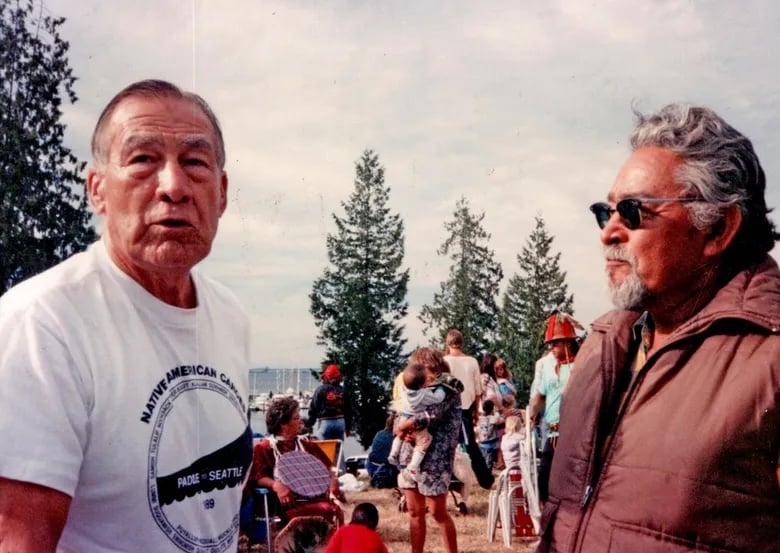
In Coast Salish territory, one of the traditional practices that was restricted before AIRFA was travel by canoe on ancestral waterways—what many Coast Salish tribes consider their original highways.
Emmett Oliver (Quinault) is a hero from Coast Salish territory and the generations of Native people that have come after him owe him a huge gratitude for helping to restore and revive the traveling canoe way of life in Coast Salish territory.
A veteran officer in the U.S. Coast Guard and a respected leader in education, policy, and advocacy, Oliver served on the planning committee for Washington State’s 1989 centennial celebration. He insisted that Native representation be part of the 100-year observance of statehood. That year, 17 canoes pulled through the Hiram M. Chittenden Locks (also called the Ballard Locks) and landed at Golden Gardens Park in Seattle.
Some of the canoes at the first Canoe Journey were from Quileute, Makah, Duwamish, Suquamish, Lummi, Upper Skagit, Swinomish, Samish, Tulalip, Lower Elwha Klallam, Port Gamble S’Klallam, Skokomish, Puyallup, Nisqually, the United Indians of All Tribes, and the Heiltsuk from Canada.
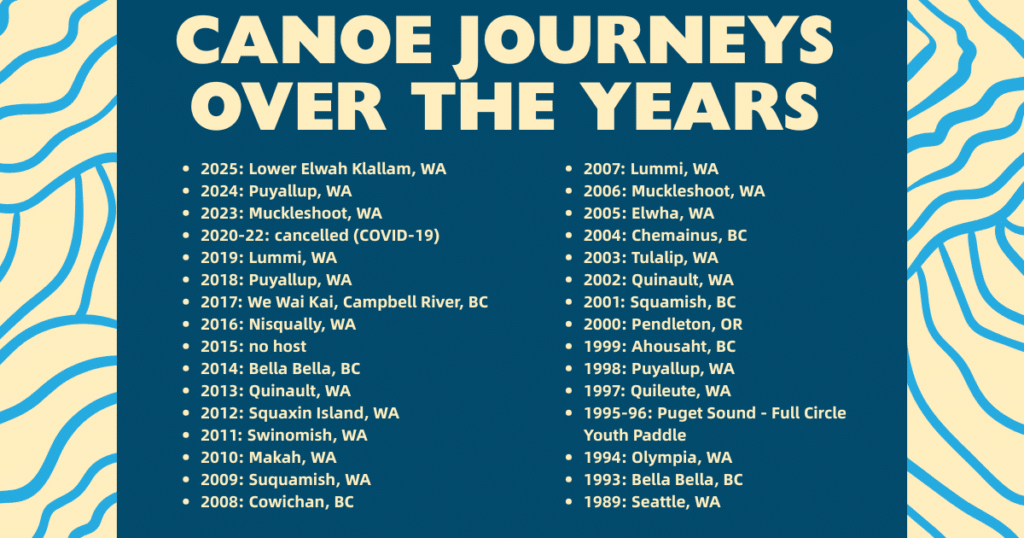
Each year since, a tribe volunteers to host the gathering on their home territories. Canoe Journey gathers thousands of people together to celebrate the long journey that the canoes have made, to share songs and dances, to eat together, see old friends (and make new ones), and continue the tradition of caring for one another by coming together. Canoe families sometimes paddle hundreds of miles to get to the final destination tribe. For example, in 2013 families traveling from Lummi to Quinault paddled around 250 miles by water to get to Quinault, including on ocean waters on the Washington coast. The host tribe offers campsites, meals and snacks, protocol space, showers, restrooms, and additional amenities like laundry and shuttle services to support canoe families and guest nations. The canoe families stay at the final destination for one week and this is known as Protocol Week. During this week, all of the tribes in attendance get an opportunity to share their cultural songs and dances with the rest of the canoe families and spectators alike. Tribes are called to the floor in the order of distance traveled. This means that when Canoe Journey is hosted by a tribe in Washington, tribes from Alaska and Oregon get to take the floor first followed by the tribes in Washington, with the host tribe closing out the week.
While on Canoe Journey, each canoe family has their own set of rules and guidelines that their family members agree to adhere to while on the journey. Some examples are: listening to the elders and leaders of the family, adhering to a curfew, not using drugs and alcohol, being either at the campsite or at the protocol tent, helping to keep the shared spaces clean, setting a good example for the younger members of the canoe family, participating in the family talks, leaving the hosting communities cleaner than when they arrived (cleaning up after themselves), not bringing hard or turbulent feelings into the canoe to help with a safe travel, work on being prepared at the set time to go, and other relating guidelines.
Reflection Questions:
- What other examples of cultural suppression and prohibiting ceremony come to mind after reading this?
- If you have attended canoe journeys, what experiences have you had?
- What are you still curious about regarding Canoe Journey?
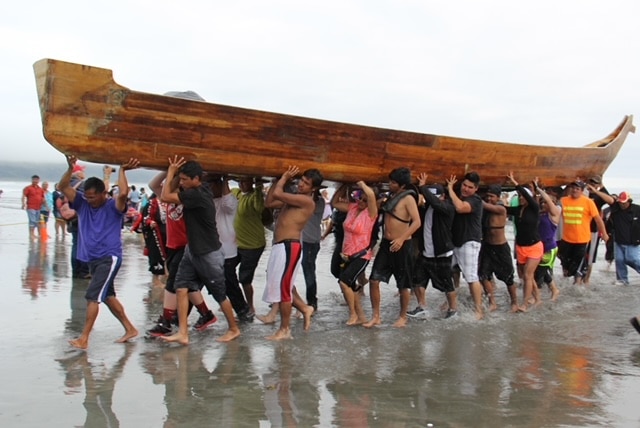
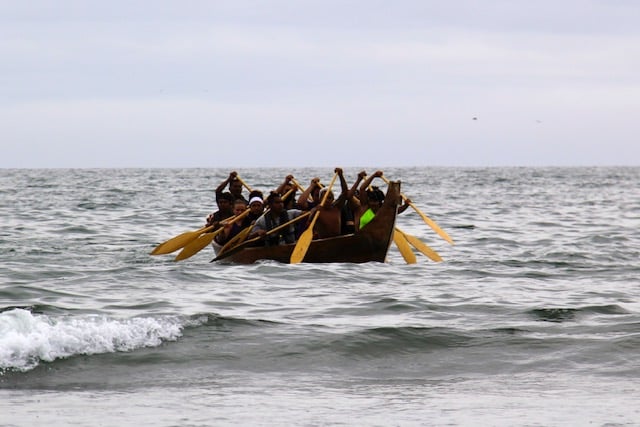
Cedar Spirit Canoe Family (Lummi) bringing Cedar Spirit ashore at the final landing for Paddle to Quinault 2013. Photos provided by the Vendiola Family.
Related Resources:
- Tribal canoes participating in the Paddle to Seattle arrive at Golden Gardens Park on July 21, 1989. (History Link | Jennifer Ott | December 12, 2016)
- Seattle Now & Then: Paddle To Seattle, 1989 (Published in The Seattle Times on-line on August 29, 2024 | Jared Leto)
- Emmett Oliver, Founder of Paddle to Seattle, Walks On at 102 (Indian Country Today | Richard Arlin Walker | March 9, 2016)
- Creation Of Ballard Locks Left One Tribe High And Dry (KNKX Public Radio | By Ariel Van Cleave | July 3, 2017)
- Popular Seattle attraction tells the story of human’s impact on salmon (KING 5 Evening | Anne Erickson | March 12, 2024)
- Centennial reveals complicated legacy of Ballard locks’ namesake (MyNorthwest | Feliks Banel | June 28, 2017)
- *Interactive resource* Move the slider to explore before-and-after maps of Seattle’s engineered waterways and shoreline (Seattle Times | Mark Nowlin and Vanessa Martínez)